KHS Digital Twin lowers fault-related costs
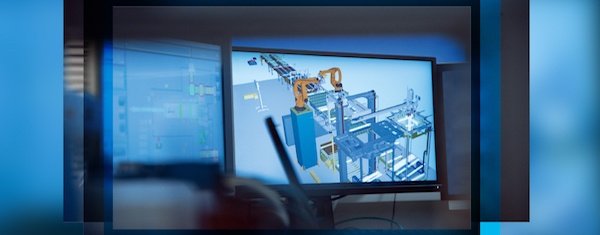
In the hereafter, the digital twin of a auto will get a key component of industrial production. KHS already uses models to well-nigh map the auto and conveyor system commissioning process.
With the help of smart, digital technologies, KHS is networking and automating production processes step by step then that machines, products, and complete lines can efficiently communicate and work with one another. "In detail, what'southward known as the digital twin enables procedures to be transferred to a virtual environment by tracking and imaging all phases in a auto's life cycle. All production processes and products can then be simulated virtually," says Stefan Diesner, caput of the Palletizing Product Middle. Alternative, optimized production processes are displayed on the computer.

Ane of the major prerequisites for this is that applied science is consistent throughout the entire value chain to forbid what is known as data aperture at the interfaces between the various engineering disciplines, namely mechanical components, electrical equipment, and software. Unlike the way a lot of work is washed today, projects are not processed sequentially, i.due east., separately and consecutively. Instead, in an ideal scenario, all departments piece of work in parallel across their respective disciplines on the implementation of a project and share a common data model – the basis for the digital twin that depicts every last detail of a system virtually and permits precise simulation.
The shared data challenge
For an technology company like KHS, which non only manufactures a considerable number of dissimilar machines but whose research and evolution departments also have a broad geographical spread, this is a significant challenge. The KHS engineers at the Palletizing Production Centre in Worms have been working on the virtual depiction and simulation of machines and organisation parts for 13 years now. Simulation or virtual commissioning especially lend themselves to use with logistics systems such equally palletizers or conveyors.

"Our aim is to continue to shorten lead times and lower mistake-related costs by expanding our virtual commissioning setup," explains Diesner. To estimate only how high these savings tin be, it helps to take a look at the rule of ten. This dominion states that the price of fault correction increases past a cistron of 10 the after in the procedure, an error is discovered. If a fault is only found and eliminated during factory commissioning, for case, the financial burden is x times higher than if the correction had already been made to the software engineering science during virtual commissioning.
Reduced fourth dimension and effort
A further objective of the current projection is to reduce the amount of time and effort required for virtual commissioning. One bones condition here is that the data is consequent. "With virtual commissioning, we accept control over data consistency," Diesner explains. "All data is generated and stored at our production site, albeit all the same in a number of unlike systems. Further steps must be taken here before efficient and bidirectional admission to this data is provided by a virtual engineering tool that includes simulation. In one case this has been done, we tin can configure the arrangement according to customer specifications or apace and efficiently commission adjusted auto designs on the screen."
In the concurrently, Worms is looking ahead – virtual commissioning is the outset step towards digitalized systems for the beverage industry and the existent digital twin. This will be able to do much more in the future. To this cease, the digital twin has to be plied with more information, however, such as data on conversions for KHS customers or operational data from product – a challenging undertaking indeed.
Source: https://packagingsouthasia.com/she-safety-health-and-environment/sustainability-health/khs-digital-twin-lowers-fault-related-costs/
0 Response to "KHS Digital Twin lowers fault-related costs"
Post a Comment